If you’ve ever stood at the base of a power pole on a residential street and wondered how your neighborhood gets consistent, reliable electricity, that box sitting partway up the pole is the answer: a distribution transformer. For years, as a supplier that’s worked directly with municipal utilities, rural co-ops, and commercial building managers, I’ve fielded the same question over and over: “What standards do these transformers actually need to meet to do their job right?” It’s not a trivial question—cut corners on the wrong standard, and you’re dealing with unplanned outages, safety hazards, or equipment replacement costs that add up fast. Over the past two decades, I’ve shipped thousands of units, and I’ve seen firsthand how adhering to established standards separates transformers that serve 20 years without a hitch from those that fail before their fifth birthday. Distribution Transformer
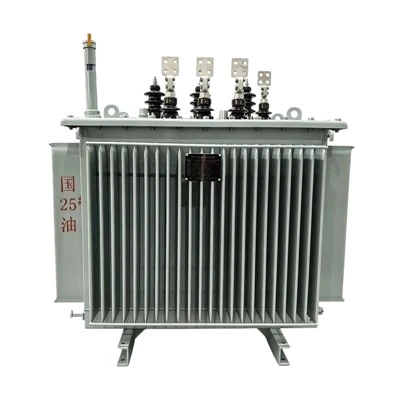
First, let’s ground this in a basic fact: distribution transformers are the link between high-voltage power lines that crisscross regions and the low-voltage power that powers your laptop, refrigerator, and streetlights. Most operate at between 10kV and 35kV on their primary side, stepping that down to 120/240V for homes or 480V for small commercial spaces. But the standards governing these units aren’t arbitrary—they’re built to balance performance, safety, and longevity, and they vary a bit depending on where in the world you’re located. In North America, the go-to standards body for transformers is the Institute of Electrical and Electronics Engineers, better known as IEEE. The most critical standard for distribution transformers here is IEEE C57.12.00, which lays out general requirements for dry-type and liquid-immersed distribution transformers rated up to 2500kVA and 38kV. That standard doesn’t just cover voltage—it defines everything from temperature limits to insulation requirements, and even how the transformer should handle short circuits, the sudden spikes in current that happen when a power line comes into contact with a tree branch, for example.
For my team, IEEE C57.12.00 is non-negotiable. Last year, we had a customer who asked for a custom transformer to be slightly lighter than the standard model to cut installation costs. They pushed us to skip a few steps in the winding process to reduce weight, but when we ran a quick check against IEEE’s standards, we saw that the thinner winding would not only fail a short-circuit test but also run 15 degrees hotter than the maximum allowable during peak demand. We walked through the test data with their engineering team, explained that a 15-degree temperature increase cuts a transformer’s lifespan by roughly half, and offered a alternative design that met all IEEE requirements while still being light enough for their installation crew. They went with that option, and later told us that transformer is still running smoothly two years later. That’s the value of standards—they’re not just hoops to jump through, they’re guardrails that protect both the customer and their end users.
Another key set of standards comes from the International Electrotechnical Commission (IEC), which is used in many parts of Europe, Asia, and Africa. IEC 60076 series is the main reference here, with IEC 60076-1 covering general specifications and IEC 60076-11 specifically for dry-type distribution transformers. A lot of my international clients ask how standards differ between regions, and the short answer is: the core performance metrics are the same, but small details can shift. For example, IEC standards place more emphasis on noise levels for transformers installed in densely populated residential areas, while some North American standards prioritize cold-weather performance for transformers deployed in northern climates where temperatures can drop well below freezing. As a supplier, we have to make sure every transformer we ship aligns with the standards relevant to its destination, and that means keeping our team trained on these regional variations—something we make a point of doing at least twice a year.
Safety standards are a huge part of the mix too, and two that come up constantly are the National Electrical Code (NEC) in the U.S. and similar codes in other countries, as well as environmental regulations for liquid-immersed transformers. NEC Article 450 sets rules for transformer installation, including minimum clearances from buildings and ground, and requirements for overcurrent protection to prevent fires. For liquid-immersed transformers, many regions now enforce regulations around the type of insulating fluid they use. Traditional mineral oil is effective, but some places restrict its use because it’s flammable and can leach into the environment if a transformer leaks. That’s where standards like IEEE C57.12.71 come in, which covers transformers with less flammable fluids like ester-based liquids. We’ve seen a big increase in demand for these units in recent years, especially in urban areas where transformers are installed on sidewalks or near apartment buildings, and being able to offer units that meet both safety and environmental standards has been a game-changer for our business.
Quality testing is where standards go from paper to real-world performance. Any reputable transformer supplier will subject every unit to a series of tests to make sure it meets the relevant standards, and those tests aren’t just a one-time check at the factory—some are required to be repeated periodically throughout a transformer’s lifespan. The most common routine tests are the winding resistance test, which checks that the copper or aluminum windings are uniform and free of defects, the insulation resistance test, which verifies that the electrical insulation can handle the required voltage without breaking down, and the load loss and no-load loss tests, which measure how much energy the transformer uses when it’s operating. For transformers rated at higher voltages, there’s also an impulse test, which simulates the sudden voltage spike caused by lightning, to make sure the insulation holds up.
Last year, a customer from a rural electric co-op told me that two transformers they bought from a competitor had failed during a summer heatwave, leading to three days of outages for a small community. When we looked into what happened, we found that the competitor’s units had skipped the full load loss test required by IEEE standards, and their insulation was rated for 10 degrees lower than the standard maximum operating temperature. That’s the kind of mistake that comes from cutting corners on standards. At our facility, every transformer goes through every required test, and we keep detailed records of all test results for every unit we ship. That’s not just good practice—it’s how we build trust with our clients, especially co-ops and utilities that rely on their transformers to keep entire communities powered.
Another often-overlooked standard is related to sustainability, and that’s something we’ve prioritized over the past decade as more clients ask for energy-efficient units. Standards like the U.S. Department of Energy (DOE) efficiency standards for distribution transformers, which were updated in 2016, set minimum levels of energy efficiency that transformers must meet to be sold in the U.S. These standards focus on no-load losses, the small amount of energy a transformer uses even when it’s not connected to any load, and load losses, the energy it uses when it’s providing power. The DOE estimates that their standards will save more than 2 quadrillion watt-hours of energy over the lifetime of transformers sold between 2016 and 2047, and avoid more than 1.5 billion metric tons of carbon dioxide emissions. For our part, we’ve invested in designing transformers that exceed the minimum DOE standards, which not only helps our clients lower their operating costs but also aligns with their goals for reducing their carbon footprint.
There’s also standards for the physical construction of distribution transformers, which impacts their durability in different environments. For transformers installed in coastal areas, where salt air can corrode metal, standards like IEEE C57.12.28 cover corrosion resistance requirements, including the use of galvanized steel or special coatings on transformer tanks and hardware. For transformers in seismic zones, like parts of California or Japan, there are standards that require reinforced construction to withstand earthquakes, including bracing that keeps windings in place during ground movement. A few years ago, we supplied a batch of transformers to a utility in a region hit by frequent earthquakes, and we worked with them to make sure each unit met the seismic requirements outlined in IEEE 693, the standard for seismic qualification of substation equipment. That order wasn’t just a sale—it was a chance to provide equipment that would keep power running when it matters most.
I get that for someone who’s not an engineer or utility manager, all these standards can feel overwhelming. But the core takeaway is this: standards exist to ensure that a distribution transformer works as intended, safely, for as long as possible. They’re not just rules from a bureaucracy—they’re the result of decades of testing, data, and real-world experience to prevent the failures that disrupt communities and cost money. As a supplier, our job isn’t just to sell a transformer—it’s to make sure it meets all the necessary standards for where it’s going, whether that’s a residential neighborhood, a rural farm, or a commercial industrial park.
If you’re a utility manager, electrical contractor, or facility owner who’s in the market for a distribution transformer, I know how important it is to get it right. A transformer that doesn’t meet the right standards can lead to unplanned outages, costly repairs, and even safety risks. We’ve shipped units to all kinds of locations, from small towns in the Midwest to urban centers on the East Coast, and we have the expertise to help you choose the right transformer that meets all the relevant standards for your specific needs. Whether you need a standard unit for a residential street, a high-efficiency model for a commercial building, or a specialized transformer for a harsh environment, we can work with you to find the right solution. Don’t take chances with your power infrastructure—reach out to us to discuss your requirements and find the transformer that will serve reliably for years to come.
Pad Mounted Transformer References
IEEE Standard C57.12.00, General Requirements for Liquid-Immersed Distribution, Power, and Regulating Transformers
IEC 60076, Power transformers
National Electrical Code (NEC) Article 450
U.S. Department of Energy (DOE) Efficiency Standards for Distribution Transformers (10 CFR Part 431)
IEEE Standard 693, Recommended Practice for Seismic Design of Substations
Zhejiang Tianrun Electric Co., Ltd.
Zhejiang Tianrun Electric Co., Ltd. is one of the most professional distribution transformer manufacturers and suppliers in China, featured by quality products and good price. Please feel free to buy CE approved distribution transformer made in China here and get quotation from our factory. We also accept customized orders.
Address: No.788 Wenyi Road, Bihu Industrial Park, Liandu District, Lishui City, Zhejiang Province, P.R. China
E-mail: luna@trne-electric.com
WebSite: https://www.trne-electric.com/
