As a supplier of aluminum turned parts, I’ve spent the last 12 years on the shop floor, watching every scratch on a raw billet and every chip curl off a CNC lathe. I’ve seen first-hand how the quiet, often overlooked property of aluminum hardness can make or break a turning job—whether we’re filling an order for aerospace brackets, automotive components, or even small-batch custom parts for medical device makers. A lot of people new to machining think aluminum is just “soft metal,” easy to spin on a lathe with no fuss. But that’s a myth, and one that can lead to scrap parts, missed deadlines, and extra costs that eat into both our margins and our clients’ budgets. Aluminum Turned Parts
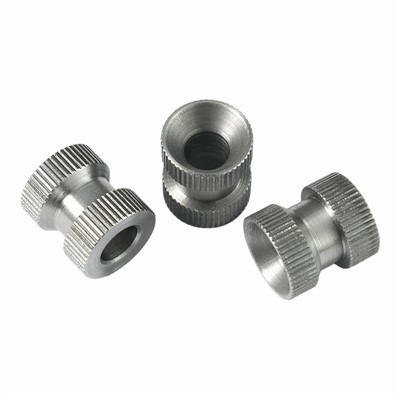
Let’s start with what aluminum hardness actually means here, because it’s not a single number that applies to every aluminum alloy. Hardness, in machining terms, measures a material’s resistance to plastic deformation—so when you’re turning aluminum, hardness dictates how the tool interacts with the workpiece, how chips form, and how smooth the final surface finish will be. Aluminum alloys aren’t one-size-fits-all; even minor tweaks to their composition, heat treatment, or cold working can swing hardness dramatically. For example, the softest aluminum we regularly work with is 1100 pure aluminum, with a Brinell hardness (the most common scale for our shop) of around 25 HB. On the other end, 7075-T6, the go-to for high-stress aerospace parts, clocks in at 150 HB. That’s a 5x difference in hardness, and it changes every step of the turning process.
First, let’s talk about tool wear. This is where hardness hits hardest for both us and our clients. When you turn a workpiece, the cutting edge of the tool is scraping and shearing away material. If the aluminum is too soft—say, 1100 aluminum—instead of shearing cleanly, it tends to smear across the tool’s edge. That smearing builds up a built-up edge (BUE), a tiny lump of aluminum that sticks to the tool. BUE doesn’t just make your surface finish rough—it can nick the tool, leading to uneven cuts or even broken tools mid-run. We had a client last year who tried to machine 1100 aluminum at their shop without adjusting their tooling; they went through three high-speed steel tools in an hour, which doubled their production time. At our shop, we counter that by using carbide tools with sharp, polished edges for softer aluminum, and we run slightly higher spindle speeds to keep the BUE from forming.
But here’s the catch: too soft isn’t the only problem. Harder aluminum alloys, like 7075-T6, are far more abrasive. Their increased hardness means the workpiece is less likely to deform, but the hard intermetallic particles in the alloy (things like Al2CuMg or Mg2Si) act like tiny grindstones against the tool. We switched our tooling for 7075 parts a few years ago from standard carbide to coated carbide tools—specifically, tools with a diamond-like carbon (DLC) or titanium nitride (TiN) coating. Those coatings resist abrasive wear 3x longer than uncoated carbide, which cut our tool change time for 7075 parts in half. If we’d ignored the hardness of 7075 and used the same tooling we do for 1100, we’d scrap 1 in 10 parts from tool chatter, and our clients would be waiting weeks for orders that should take days.
Next, chip formation. When you turn metal, the way chips curl and break directly affects your efficiency and part quality. Harder aluminum chips are more brittle; they snap into small, manageable pieces almost immediately after being cut. That means they don’t tangle around the tool or get caught between the workpiece and the lathe, which would scratch the finished surface. For example, when we turn 6061-T6, a mid-hardness alloy used for automotive engine parts, the chips come out as small, C-shaped pieces that fall into the chip conveyor every time. No extra cleanup, no risk of chips gouging the part mid-turn.
Softer aluminum, though, produces long, stringy chips. Those chips wrap around the tool, the workpiece, and even the lathe spindle, creating a huge mess and a safety hazard. We once had a near-miss with a stringy 1100 aluminum chip that wrapped around a rotating spindle; an operator tried to pull it off with a wrench, and the wrench slipped, almost hitting them. To fix that, we adjust our feed rate and depth of cut based on hardness. For soft aluminum, we run a slightly deeper cut and slower feed to encourage chips to break, instead of flowing out in one long strand. For harder aluminum, we use higher spindle speeds to keep the shear zone temperature up, which also helps brittle chips break cleanly.
Surface finish is another big one, especially for clients who need tight tolerances or smooth surfaces (like those in consumer electronics, where aluminum parts are often exposed, or hydraulic parts where a rough finish would cause leaks). Harder aluminum parts tend to have a more consistent surface finish, because their resistance to deformation means the tool cuts cleanly without smearing. We measured a batch of 7075-T6 turned parts last month; their surface roughness was 0.8 Ra, which is smooth enough for anodizing and perfect for aerospace assembly. In contrast, a soft aluminum part might have a roughness of 2.0 Ra, even if we run it at the same speed and feed. That extra roughness means the part might need secondary polishing, which adds time and cost for our clients. We’ve had clients choose a slightly harder aluminum alloy just to avoid finishing steps—even if it costs a bit more upfront, the total savings are worth it.
But wait—hardness doesn’t just affect the turning process on the shop floor. It affects how we set up the entire job, from programming the CNC lathe to planning for tolerances. Harder aluminum is less likely to spring back after being cut, so we can hold tighter dimensional tolerances. For example, when we turn a 0.5-inch diameter pin for a medical device made of 7075-T6, we can hold a tolerance of +/- 0.0005 inches, because the hard material doesn’t flex during the cut. Soft aluminum, on the other hand, will flex under the pressure of the tool, so we have to build in a little extra material to account for springback, which can add material waste. We had a client who tried to use soft aluminum for a high-tolerance aerospace bracket; their initial parts were out of spec because of springback, so they switched to 6061-T6, and we hit their tolerance on the first try.
I should also mention a common mistake our clients make: assuming all aluminum of the same grade has the same hardness. For example, 6061 aluminum comes in tempers from O (annealed, 20 HB) to T6 (heat-treated, 95 HB). If a client orders 6061-O for a part that needs to be machined to tight tolerances, they’re setting us (and themselves) up for trouble. The annealed temper is soft, so it will spring back, form BUE, and produce bad chips. But if they specify 6061-T6, the hardness jumps up, and the turning process becomes far smoother. That’s why we always ask clients to share the temper of their aluminum, not just the alloy—hardness is in the temper, and it changes everything.
Now, let’s talk about how we adjust our turning process to work with aluminum’s hardness, based on our 12 years of experience. For soft aluminum (under 50 HB, mostly pure 1xxx alloys or annealed tempers): we use sharp, polished carbide tools, run spindle speeds between 1500-2500 RPM, and adjust feed rate to 0.010-0.015 inches per revolution. We also use a synthetic coolant with high lubricity to reduce smearing. For mid-hardness aluminum (50-100 HB, like 6061-T4 or T6): we use coated carbide tools, speeds between 1000-2000 RPM, and feed rates of 0.008-0.012 inches per revolution. For hard aluminum (over 100 HB, like 7075-T6 or 2024-T3): we use diamond or DLC-coated carbide tools, lower spindle speeds (600-1200 RPM) to resist tool wear, and slightly deeper cuts to break brittle chips.
We’ve tested this across thousands of jobs, and it’s cut our scrap rate from 4% in 2011 to less than 1% now. That’s not just better for us—it’s better for our clients, because it means faster delivery, no unexpected cost overruns, and parts that meet their exact specs.
The key takeaway here, as an aluminum turned parts supplier, is that aluminum hardness isn’t a minor detail—it’s the foundation of every turning job. Whether you’re a automotive engineer specifying an alloy, an aerospace procurement manager ordering brackets, or a small business owner needing custom turned parts, ignoring hardness leads to avoidable problems: tool breakage, scrap parts, missed deadlines, and extra costs. For example, a client of ours once tried to machine 7075-T6 with uncoated high-speed steel tools; they spent $2,000 on tools and scrapped $5,000 in parts before contacting us. We supplied them with parts machined with coated carbide, and they paid half the cost and got their parts 3 days faster.

If you’re working on a project that requires aluminum turned parts, don’t leave hardness to chance. Specify the alloy and temper, and if you’re not sure which is right for your application, reach out to us. We’ll walk you through the best alloy, tooling, and process to make sure your parts come out perfect, on time, and on budget. We’ve worked with aerospace, automotive, medical, and consumer electronics clients for over a decade, and we know how to adjust every step of the turning process to fit the hardness of your aluminum. Whether you need a single custom part or a 10,000-piece production run, we’re here to help you get it right.
CNC Turning References
- Astakhov, V. P. (2006). Metal Cutting Mechanics and Practices. Marcel Dekker.
- Brandt, W. (2005). Machining Aluminum Alloys: A Practical Guide. ASM International.
- Diniz, A. E., & Oliveira, J. F. G. (2000). The effect of tool coatings on the machining of aluminum alloys. Journal of Materials Processing Technology.
- Kalpakjian, S., & Schmid, S. R. (2014). Manufacturing Processes for Engineering Materials. Pearson.
Huizhou Quanyi Precision Hardware Products Co., Ltd.
We’re well-known as one of the leading aluminum turned parts manufacturers and suppliers in China, featured by quality products and good service. Please rest assured to buy customized aluminum turned parts made in China here from our factory. Contact us for more details.
Address: Building A10, 7th Floor, Zhongchuangyingke 5G Industrial Park, Zhonghan Industrial Park, Tonghu Town, Huizhou City
E-mail: info@qycncturning.com
WebSite: https://www.qycncturning.com/
