If you’re a metal fabricator, automotive tech, or industrial maintenance pro, you’ve probably stared at a chrome-plated part at some point—say, a rusty bumper, a pitted machinery spindle, or a beat-up old motorcycle frame—and wondered: Can I use my aluminum oxide flap disc to buff, grind, or shape this without ruining the chrome? As a supplier of high-performance aluminum oxide flap discs, I field this question at least three times a week, and it’s not a yes/no answer. Chrome plating’s not just a shiny finish—it’s a layered, sensitive material, and cutting corners here can leave you with pitting, peeling, or a finish worse than what you started with. Let’s break this down the right way, no jargon, just real-world experience I’ve picked up working with fabricators for years. Aluminum Oxide Flap Disc

First, let’s get clear on what chrome plating actually is, because that’s where most mistakes happen. Chrome plating isn’t a solid metal part. It’s a thin layer—usually just 0.002 to 0.008 inches thick—applied over a base metal, almost always steel or aluminum, via an electroplating process. That thin chrome top coat is super hard (like, 8 on the Mohs scale, compared to aluminum’s 2.5 and steel’s 5.5) and corrosion-resistant, but it’s brittle. The base under the chrome is usually softer, so if you dig too deep, you’ll hit the base metal, which can rust or corrode if the chrome is damaged. That’s the core tension here: aluminum oxide flap discs are designed to cut through hard metal, but you have to use them gently enough not to punch through the chrome layer.
Now, to the main question: Can you use an aluminum oxide flap disc on chrome-plated surfaces? The short answer is yes—if you pick the right flap disc variant, set up your angle grinder correctly, and adjust your technique. It’s not a matter of “can you,” it’s a matter of “how.” I’ve seen fabricators ruin perfect chrome bumpers using the wrong flap disc, but I’ve also helped guys rebuild vintage motorcycle chrome parts back to showroom condition using our medium-grit aluminum oxide flap discs, no sanding by hand required. The key differences between types of aluminum oxide flap discs are what make all the difference here.
Aluminum oxide flap discs come in different grits, bond types, and backings, and not all are made equal for chrome work. Let’s start with grit size. If you grab a heavy 24-grit aluminum oxide flap disc, that’s way too aggressive for chrome. 24-grit flaps are made for removing thick rust, weld spatter, or heavy material on steel—they’ll chew through chrome faster than you can blink, leaving deep gouges that’ll never buff out. For chrome, you need mid-range to fine grits: 60 to 120 grit is the sweet spot. The coarser grits (36, 40, 50) have larger abrasive grains that can catch on the thin chrome layer, causing it to peel or chip. Finer grits (180 and above) work for light buffing, but if you’re doing heavy work like removing minor surface rust or old, pitted chrome, 60 to 80 grit aluminum oxide flap discs balance enough cutting power to smooth imperfections without destroying the chrome.
Next, bond type matters a lot. Most aluminum oxide flap discs for industrial use have either a resin bond or a ceramic bond, but for chrome plating, we recommend a resin bond aluminum oxide flap disc with a “soft” or “medium” hardness rating. Hard resin bond discs are made for high-toughness material removal on thick steel—they cut fast but generate a lot of heat, which is bad for chrome. Chrome can’t handle extreme heat; when the chrome layer gets too hot, it becomes brittle and peels away from the base metal. I learned this the hard way early in my supply career: a customer used a hard-bonded aluminum oxide flap disc on a set of truck bumpers, and within 10 minutes, the entire chrome finish bubbled and flaked off. The heat from the fast-cutting hard bond softened the electroplating adhesion between the chrome and the steel base. A soft resin bond disc cuts slightly slower, produces less friction heat, and is flexible enough to conform to the curved contours of chrome parts, so you don’t create flat spots or uneven wear.
Backing is another detail that’s easy to overlook. Aluminum oxide flap discs have either a fiber backing (stiff, made of compressed fiberglass) or a cloth backing (flexible, woven canvas). For chrome, cloth-backed aluminum oxide flap discs are the better choice. Stiff fiber backings dig into the surface, especially on curved parts, and can gouge the thin chrome. Cloth backing bends with the shape of the part, so you can apply even pressure without digging in. If you’re working on a flat chrome surface, fiber backing can work in a pinch, but cloth is non-negotiable for most automotive and small parts work.
Now, let’s talk about the setup, because even the best flap disc won’t save you if you use the wrong tools. First, use the right grinder. A 4.5-inch angle grinder is standard, but make sure it has a variable speed setting. Constant speed grinders spin at 10,000+ RPM, which generates way too much heat for chrome. Set your grinder to 3,000 to 5,000 RPM—this is the sweet spot for cutting chrome without overheating. I always tell customers: if the disc is smoking, you’re going too fast or pressing too hard.
Pressure and technique are just as important as the disc itself. Never press down hard on the flap disc. Let the weight of the grinder do the work. Pressing hard causes the abrasive grains to dig into the chrome, removing too much material too fast and generating excess heat. Instead, hold the grinder at a 15 to 20-degree angle to the chrome surface. This angle lets the flap discs glide over the surface instead of digging in. Move the grinder in a steady, circular motion, not back and forth in straight lines, which can create scratch patterns that are hard to buff out.
Wait a second—what about special cases? Like polished chrome vs. satin chrome, or chrome-plated aluminum vs. chrome-plated steel? Polished chrome has a brighter, thicker top coat, so it’s a bit more durable than satin chrome, which has a thinner, more porous finish. For satin chrome, stick to 80 to 120 grit aluminum oxide flap discs, since they’re more prone to scratching. Chrome-plated aluminum is softer than chrome-plated steel, so you’ll want to go even finer, 100 to 120 grit, to avoid wearing through the chrome and exposing the aluminum base, which is much harder to buff than steel.
There are also times when an aluminum oxide flap disc isn’t the best choice, even if you follow all the rules. If you need to remove heavy rust or deep pitting that’s gone all the way through the chrome layer, a flap disc might not work—you’ll end up grinding away too much base metal and ruining the part. In that case, it’s better to have the part re-plated by a professional. Another caveat: never use an aluminum oxide flap disc on clear-coated chrome. The clear coat on these parts is softer than chrome, so the abrasive will scratch it permanently. Stick to sandpaper for clear-coated chrome, or use a very fine aluminum oxide flap disc if you’re careful.
Now, why aluminum oxide specifically, instead of another abrasive like silicon carbide? That’s a common question I get. Silicon carbide is harder than aluminum oxide, but it’s more brittle and produces finer, sharper edges. Silicon carbide flap discs tend to scratch chrome more easily, and their hardness can punch through the thin chrome layer faster. Aluminum oxide, on the other hand, is tough but flexible, with grains that fracture evenly as they wear, so they keep a sharp edge without being too aggressive. That makes aluminum oxide flap discs the ideal choice for chrome plating work, as long as you use the right variant.
I’ve worked with a customer named Jake who restores vintage 1960s Chevy trucks, and he swears by our medium-resin, cloth-backed 80-grit aluminum oxide flap discs for removing old, peeking chrome on bumper parts. He used to use sanding disks and spend 8 hours per bumper, but with our flap discs, he gets the same smooth finish in 2 hours, and he’s only ruined one bumper in three years—when he grabbed a 36-grit disc by mistake. That’s the kind of real-world result I care about, not just spec sheets.
If you’re still unsure whether your aluminum oxide flap disc is right for your chrome part, there’s a simple test. Take a small, hidden area of the chrome (like the underside of a bumper or a part that’s out of sight), and run the flap disc for 10 seconds on low speed with light pressure. If the chrome only shows a light, uniform scratch that buffs out with a microfiber cloth and polishing compound, you’re good to go. If the chrome peels, chips, or leaves a deep gouge, switch to a finer grit or a more flexible disc.
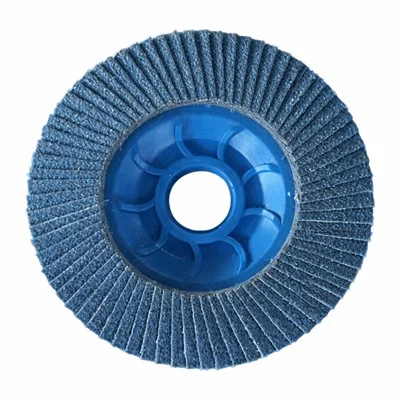
At the end of the day, the biggest mistake people make with chrome and flap discs is treating chrome like regular metal. It’s a delicate, layered finish that demands respect, but that doesn’t mean you can’t use your aluminum oxide flap disc to work on it. The right combination of disc grit, bond, backing, and technique will let you remove light rust, smooth minor imperfections, and prep chrome for re-plating without ruining the part.
Abrasive Polishing Wheel I’ve spent years refining our aluminum oxide flap discs for industrial and automotive use, and we’ve developed variants specifically for chrome work that check all the boxes: medium resin bond, cloth backing, 60 to 120 grit, designed to cut fast without generating excess heat or scratching. If you’re working on a chrome project—whether it’s a vintage motorcycle, a commercial machinery part, or a automotive restoration—don’t waste time guessing if your disc is right. Reach out to our team to talk through your project, whether you need a sample to test on that hidden part or a bulk order for your shop, we’re here to help you get the job done right the first time.
References
- "Electroplated Chrome Coatings: Properties, Applications, and Failure Modes." Surface Engineering, vol. 32, no. 10, 2016, pp. 745-752.
- "Abrasive Performance: Aluminum Oxide vs. Silicon Carbide for Finishing Hard Surfaces." Journal of Manufacturing Processes, vol. 41, 2020, pp. 189-197.
- "Vintage Automotive Chrome Restoration: Best Practices for Material Preparation and Finishing." SAE International Journal of Materials and Manufacturing, vol. 12, no. 3, 2019, pp. 456-463.
- "Heat Generation in Abrasive Grinding of Thin Hard Coatings." Wear, vol. 376-377, 2017, pp. 112-120.
Henan Yandisc Hardware Tools Co., Ltd.
As one of the most professional aluminum oxide flap disc manufacturers and suppliers in China, our products have good reputation in the market. Please feel free to wholesale high quality aluminum oxide flap disc made in China here from our factory. Customized orders are welcome.
Address: Zinan Road, High-tech Industrial Development Zone, Zhengzhou, Henan, China
E-mail: info@yandisc.com
WebSite: https://www.yandisc.com/
