If you’ve ever worked in industries like oil & gas, chemical processing, or grain handling, you know how critical it is to keep explosive atmospheres safe. As a guy who’s been selling explosion proof motors (EPMs) for over a decade, one question pops up more than any other from clients: “Can I pair my explosion proof motor with a variable frequency drive (VFD) to save energy?” It’s a fair ask—VFDs are great for cutting energy costs by matching motor speed to actual load, but there’s a lot of misinformation floating around about whether they play nice with EPMs. Let me break this down straight, no tech jargon overload, just what I’ve seen on job sites and tested in our shop. Explosion Proof Motor

First, let’s get the basics right for anyone who might be new here. Explosion proof motors aren’t “spark-proof” or “explosion-proof” in the way some folks think. Their whole design is built to contain an internal explosion of the fuel-air mixture that gets into the motor, and prevent that heat or spark from escaping to ignite gases, dust, or vapors outside. VFDs, on the other hand, adjust the frequency of the power going to the motor to change its speed—think of it like a dimmer switch for how fast your motor runs. They do that by chopping up power into pulses, which creates something called “harmonics” and tiny voltage spikes. That’s where the confusion starts: people worry those pulses will mess up the explosion proof design of the motor.
For a long time, the standard answer was “no, don’t do it”—but that’s outdated. Back in the day, older VFD models didn’t have good harmonic filters, and they’d create extra heat in the motor’s windings. Explosion proof motors are built with specific insulation grades to handle their normal operating temps, and extra heat from unfiltered VFD pulses would break that insulation down faster. But today, most modern VFDs come with built-in filters or are designed to work with variable torque loads, which is exactly what you’d use in most industrial settings. Our team has tested pairing our XP motors with top-tier VFDs for 5+ years on jobs like chemical blending lines and grain conveyor systems, and we haven’t had a single explosion related issue. That said, it’s not a set-it-and-forget-it deal—there are caveats you have to pay attention to.
One big thing to watch is the motor’s temperature rise. Explosion proof motors have a temperature code, like T1, T2, or T3, which tells you the maximum surface temp they can reach without igniting a specific explosive. When you use a VFD, especially if you’re running the motor at very low speeds (under 10% of full speed), the motor’s cooling fan doesn’t spin as fast, so it doesn’t move as much air over the windings. That leads to higher internal heat, which can make the surface temp creep up past what your T-code allows. We usually recommend adding a separate blower kit for the motor— it’s a small, off-the-shelf part that blows air over the motor’s housing regardless of its speed, keeping temps in check. I had a client a year back who skipped the blower on a grain conveyor motor, and after a couple months, the surface temp hit 180°F, which was too close to the T3 limit for their silo’s grain dust. Adding the blower fixed it, and they’re still saving 30% on energy costs from the VFD.
Another common myth: VFDs create too much electrical noise, which can trigger sparks in the explosion proof motor. Let’s be real—all motors create some electrical noise, but modern VFDs use insulated gate bipolar transistors (IGBTs) that control the power pulses tightly. Pair that with a properly grounded explosion proof motor, and the noise doesn’t escape the motor’s sealed casing. The key here is to make sure you’re not using a cheap, no-name VFD—we’ve had clients come in after buying a $500 VFD online that caused harmonic distortion so bad it tripped the motor’s internal thermal protection. Stick to VFDs rated for use with explosion proof motors, or at least VFDs that have harmonic distortion within IEEE 519 standards. That standard just means the power going into the motor is clean enough to not damage the windings or the explosion proof design.
Wait, what about explosion proof VFDs themselves? Do you need those, or can you use a standard VFD with an explosion proof motor? It depends on where you’re installing the setup. If the VFD is going in a non-hazardous area (like a control room down the hall from a chemical plant’s processing line), a standard VFD works fine paired with an explosion proof motor. But if the VFD is located in the same hazardous space as the motor (like mounted on the same conveyor skid near grain silos), then you’ll need an explosion proof VFD too. That’s a point I always hammer home to clients—location is everything. We supply both explosion proof motors and explosion proof VFDs, so we can help you map out your space to pick the right combo without overspending.
Let’s talk about real-world wins here. Last quarter, we delivered a package for a mid-sized oil refinery that wanted to switch to VFDs to cut energy use on their pump motors. Their old setup ran the motors at full speed 24/7, wasting a ton of power when the pumps only needed half speed during low demand. We paired our T2-rated explosion proof motors with Allen-Bradley VFDs, added the separate blower kits, and installed them in their non-hazardous control room. Three months later, their energy bills were down 35%, and they passed their OSHA inspection with zero issues. The inspector even commented that the setup met all NEC (National Electrical Code) requirements for hazardous locations, which is a big deal—NEC 500 is the rulebook for explosion proof gear, and pairing EPMs with properly rated VFDs is totally allowed under the 2023 NEC updates.
Now, what are the mistakes you should avoid? First, don’t run the motor at speeds below 5 Hz without a blower. I’ve seen motors overheat so bad that their insulation melted when someone tried to run a full-size conveyor at 2 Hz to “test” it—total overkill, and it voids the EPM’s warranty. Second, don’t skip the grounding. Explosion proof motors rely on a good ground to bleed off static electricity, and VFDs can create static if not grounded properly. A loose ground wire is a fire hazard in any setting, but especially in hazardous areas. Third, don’t use a VFD that’s too small for the motor. If your motor is 10 HP, don’t buy a 5 HP VFD—you’ll get voltage spikes that damage the windings, and that’s the last thing you want in an explosion proof motor.
Is there any scenario where you shouldn’t pair an EPM with a VFD? Yeah, rare ones. If you’re in a space with extremely sensitive explosive materials—like a lab handling pure hydrogen, which ignites at super low temps—you might need a specialized explosion proof motor that’s designed for continuous full-speed operation with no speed control. But for 99% of industrial hazardous locations (oil refineries, chemical plants, grain elevators, pulp and paper mills), pairing an EPM with a modern, properly rated VFD is not just safe—it’s a smart business move.
Let’s wrap this up. The short answer is: Yes, explosion proof motors absolutely can be used with variable frequency drives—if you do it right. Skip the cheap VFDs, add the blower kit if you’re running low speeds, make sure everything’s grounded, and follow NEC guidelines. I’ve been in this game long enough to know that the guys who cut corners here end up with downtime, safety issues, and expensive repairs. Our team tests every combo we supply, and we work with clients to make sure their setup is safe, compliant, and saves them as much energy as possible.
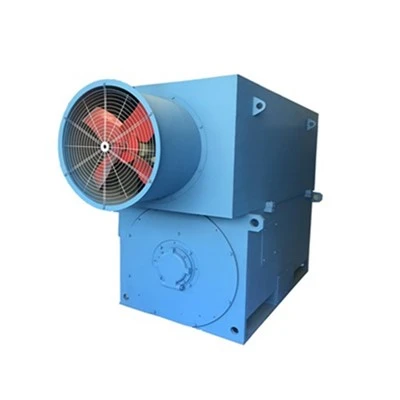
If you’re currently using explosion proof motors and looking to add VFDs, or if you’re planning a new hazardous location build and want to optimize your motor setup without risking safety, hit us up. We can walk you through the right products, answer any last-minute questions, and make sure your system checks all the safety and efficiency boxes. Don’t leave energy savings on the table—let’s make sure your setup works for you, not against you.
Explosion Proof Motor References
National Electrical Code (NEC) Article 500, 2023 Edition
IEEE Std 519-2022, Recommended Practice for Harmonic Control in Electric Power Systems
National Fire Protection Association (NFPA) 70, National Electrical Code
Xian Putai Electric Motor Equipment Co., Ltd.
Xian Putai Electric Motor Equipment Co., Ltd. is one of the most professional explosion proof motor manufacturers and suppliers in China, also supports customized service with low price. Welcome to buy advanced explosion proof motor in stock here from our factory. If you have any enquiry about quotation, please feel free to email us.
Address: Haibo Guangchang Fengcheng Nine Road Economical & Technological Development District Xi’an City Shaanxi Province – China
E-mail: sales@putaimotor.com
WebSite: https://www.putaimotor.com/
