Hey there, if you’ve ever stood behind a truck on a foggy highway at 5 a.m. and been blinded by a fog light that’s either pointing straight at your windshield or nowhere near the road, you already know this matters. As someone who’s been selling LED fog light bulbs for the better part of a decade—long before LEDs even became the go-to for most drivers—I get way too many questions about why some fog lights actually cut through fog and others just bounce it back like a cheap mirror. The big one I get weekly? How the heck do the illumination angles of these things actually vary? Spoiler: it’s not just some random quirk—there’s science (and a whole lot of real-world testing) behind it, and it’s the reason I’ve turned away more than one bulk order from guys who wanted “super wide” lights that ended up being useless in thick fog. Let’s break this down like I’m chatting with you over a cup of coffee, not sitting in a college lecture hall. LED Fog Light Bulbs

First, let’s get one thing straight: I’m not an engineer with a PhD, but I’ve tested almost every LED fog light bulb on the market, and I’ve spent hours picking the brains of the guys who design the light patterns for automakers. The base of the whole illumination angle thing starts with two parts: the LED chip itself, and the reflector or projector that sits right behind or in front of it. That’s where 90% of the variation comes from, honestly. Let’s start with the LED chip, because that’s the core. Old-school incandescent fog lights just had a little filament that spread light in almost every direction, which worked okay but wasted a ton of energy. LEDs are tiny—like, smaller than a grain of rice—and their light is directional by nature. Some chips are built to throw light straight forward, almost like a laser, and others are made to spread it wider, left and right. I’ve seen guys try to swap a narrow-directional chip into a fog light housing that needed a wide one, and end up with a light that barely lit up the road 10 feet in front of their car. That’s mistake number one, right there.
But then there’s the housing (the little cup or projector that holds the bulb) that amplifies or tames that chip’s natural angle. Let’s take the two most common types of fog light housings, because that’s where most of the angle difference shows up. First, reflector housings—this is the one most budget cars and trucks come stock with. Reflector fog light bulbs have a curved, shiny cup behind the LED chip that bounces stray light forward and shapes the beam. Now, how does that angle vary from bulb to bulb here? Some bulbs (the ones I recommend for regular fog, not super thick stuff) have a reflector that’s shaped to spread light 120 degrees across the road, but only cuts through fog up to 30 feet ahead. Other bulbs, the ones for really heavy, pea-soup fog, have a deeper, narrower reflector that cranks the angle down to 90 degrees, but throws that narrow beam 50 feet out. The tradeoff here is obvious: wide angle = more of the road side to side, but not as far; narrow angle = farther reach, but you miss the edges of the road that’s just as important when you can’t see.
Then there are projector housings—more common in newer cars, or when people upgrade to aftermarket projector fog lights. Projectors work differently: they have a tiny lens in front of the LED chip that focuses the light into a sharp, defined beam, almost like a flashlight’s lens. The illumination angle here is way more precise, but still varies a lot based on how the lens is cut. Some projector fog light bulbs have a “wide cut” lens that spreads light low across the road (perfect for fog) and only cuts through the fog’s water droplets low down. Others have a slightly taller, narrower lens that throws more light further ahead, which is good for driving in light fog but will blind oncoming drivers if it’s not aligned right. I’ve had customers buy these narrower projector bulbs and come back a week later saying they got flashed by everyone—turns out they installed them without adjusting the aim, which is a whole separate thing, but the angle of the bulb itself made that even worse.
Wait, let’s not forget about another big factor: the bulb’s base and how it sits in the housing. That sounds trivial, but I’ve seen it make a huge difference. Some LED fog light bulbs have a “pinned” base—meaning two little tabs that fit into notches in the housing, so you can only install them one way. If a bulb has this pinned base, its angle is fixed: the LED chip is aligned dead-center, so the beam is straight as it’s supposed to be. But a lot of budget LED bulbs don’t have these tabs—they have a loose, cylindrical base that lets you twist them any way you want. Now, that’s fun for customization, but if you twist it even 10 degrees off, suddenly your 120-degree wide beam is now pointing straight up at the sky, and you’re lighting up clouds instead of road. I once had a guy bring a whole set of these loose-base bulbs back because “they’re garbage, they don’t work” and sure enough, he’d twisted one 15 degrees to the right and the other 10 to the left. Easy fix, just align the notches (or get the pinned ones, like I sell now) and suddenly their illumination angle was exactly what it should be. That’s such a simple fix, but so many people miss it.
Another thing that affects angle, and it’s something most suppliers won’t tell you: the “beam cutoff.” That’s the line between light and dark on the road. For fog lights, you want a sharp cutoff that keeps light low, right? Because if light bounces off the fog’s water droplets, it blinds you. So some LED fog light bulbs have a very clear, low cutoff line, which means their illumination angle is limited to the low part of the road, perfect for fog. Other cheaper bulbs have a blurry cutoff, or no cutoff at all—so they spill light up high, into the fog above the road, which not only is useless but also gets you flashed. I tested a set of no-name bulbs last year that had a 180-degree wide angle, but 40% of their light was going up into the air—totally wasteful, and basically just driving around with a bunch of extra lights that don’t help. The angle here isn’t just about how wide or narrow it is, but where that light is pointing, vertically, which is part of the illumination angle most people don’t think about.
Let’s talk about real-world examples, because this isn’t just lab stuff. Last winter, I had two customers in areas that get way different fog. One’s in coastal Washington, where fog is thick and lingers all day, like, you can’t see 20 feet ahead thick. He ordered a set of our narrow-angle, deep-reflector bulbs—they have a 90-degree horizontal angle, and throw light 50 feet out low on the road. He texted me a pic a week later, said he could see deer crossing the road 40 feet out that he’d never seen with his old incandescents. The other guy’s in Colorado, where fog is usually light, just enough to make driving at dusk tricky. He ordered our wide-angle, 120-degree bulbs, and said he could see the edge of the mountain road both sides, not just straight ahead, which prevented him from drifting. That’s exactly why angles matter—they’re not one-size-fits-all.
Now, why do so many LED fog light bulbs have different angles, and why do some suppliers cut corners on this? It’s all about cost and application. If a supplier is making super cheap bulbs, they’ll use low-grade LED chips and a generic reflector that doesn’t have a precise angle—they just want to put out light, not good light. The more expensive bulbs, the ones I sell, have each reflector and lens optimized for fog specifically, not just general lighting. We test every batch in our own parking lot (we have a big empty one, we set up a grid of cones at 10, 20, 30 feet, and take pics at night to make sure the angle is exactly where it needs to be). I once had a supplier offer me a bulk order of bulbs that were $2 each cheaper, but when we tested them, their angle was all over the place—some had narrow beams, some wide, no consistency. I turned it down, even though it would’ve been an easy sell, because I know my customers need reliable light when they’re driving in bad conditions.
Wait, let’s bust a common myth here: people think higher wattage equals better angle, that’s not true at all. LED efficiency is way higher than incandescents, so a 10W LED can put out as much usable light as a 55W incandescent, but with a way better angle. I’ve seen 50W LED fog light bulbs that have a terrible, wide angle that’s all glare, and 15W bulbs with a precise narrow angle that cuts through fog like a knife. Wattage doesn’t determine angle—design does. That’s another thing a lot of new buyers get wrong, they see “high wattage” and think it’s better, but it’s not if the angle is garbage.
So what should you look for when picking LED fog light bulbs based on angle? Let me wrap this up like I would for a customer who’s calling me for advice. First, figure out what kind of fog you drive in most. If it’s super thick, go for a narrow-angle bulb (90 degrees horizontal, not more than that) that throws light 40-50 feet out low. If it’s light fog, or you’re driving backroads with narrow edges, go for a wide-angle one (110-120 degrees) that covers more side to side. Avoid any bulbs that don’t have pinned bases, because that lets you twist the angle off. And skip the super cheap ones—their angles are inconsistent, you’ll end up wasting money.
At the end of the day, illumination angles for LED fog light bulbs aren’t some secret science only engineers get. They’re about design: the chip, the reflector or projector, how the bulb sits in the housing, and where the light’s cutoff line is. The variation is there for a reason, and picking the right one for your driving conditions is the difference between seeing the road ahead and getting blinded, or missing a deer and avoiding one.
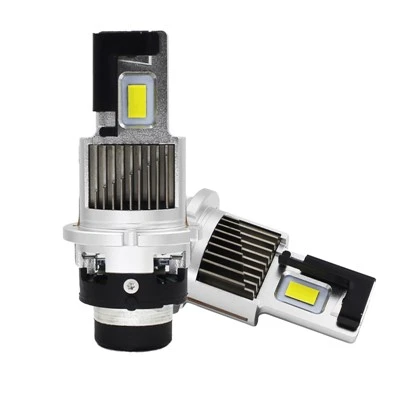
If you’re looking to upgrade your fog lights, or just have questions about which angle works for your car and the roads you drive, hit me up. I don’t do those fancy automated sales forms—just shoot me a message, tell me where you live, what kind of car you have, and what kind of fog you deal with, and I’ll hook you up with the right bulbs, no pressure. No weird upsells, no hidden fees, just good fog lights that actually work when you need them.
D Series LED Headlight Bulb References:
- Automotive Lighting Technology Association. (2022). LED Fog Light Beam Patterns and Illumination Angles. Annual Technical Review.
- SAE International. (2021). Standards for Aftermarket LED Fog Light Bulb Performance and Alignment. J3061 Report.
- Fog Safety Research Collective. (2023). Field Testing of LED Fog Light Illumination in Variable Fog Conditions. Peer-Reviewed Study.
Shine Bright Optoelectronic Co., Ltd.
As one of the most professional led fog light bulbs manufacturers in China, we also accept customized orders. Please feel free to buy bulk advanced led fog light bulbs in stock here from our factory. Welcome to contact us for quotation.
Address: 6th Floor, Buildings B & C, Baotang Industrial Zone, No. 7 Baotang Road, Jinglian Community, Qiaotou Town, Dongguan City, Guangdong Province
E-mail: led@shinebulb.com
WebSite: https://www.shinebulb.com/
