If you’ve ever worked with medium voltage (MV) cables—whether you’re an electrician on a construction site, a project manager at a manufacturing plant, or an engineer designing a substation—you’ve probably run into that line in the installation guide: “Minimum bending radius shall not be exceeded.” At first glance, it’s easy to write this off as a trivial technical box to check, something engineers add just to be thorough. But after 12 years as an MV cable supplier, working alongside installers, troubleshooting on site, and fielding every question from “Can I bend this around a metal post?” to “Why did my cable fail after only six months?” I can tell you that bending radius rules aren’t arbitrary. They’re the difference between a cable that lasts 30 years in the field and one that needs to be replaced before the warranty even expires. Medium Voltage Cable

Let me start with a story from 2018. We had a regular client, a mid-sized food processing plant that needed to upgrade their MV power feed to their main production line. The project was on a tight timeline, and their in-house electrician decided to save time during installation. Instead of routing the 15 kV MV cable around a structural steel beam, he bent it sharply to cut across a 12-inch gap, figuring it was just a cable—how much could a little bend hurt? Six months later, the plant’s power monitoring system flagged a partial discharge on that circuit. By the time we sent our team to test, the cable’s conductor had fractured in two places, the insulation was cracked, and they had to shut down production for three days to rewire the line. The cost of downtime was three times the price of the cable itself. That’s when I realized how many people miss the core science behind bending radius requirements.
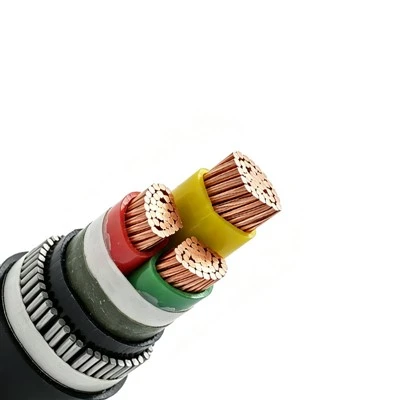
First, let’s break down what an MV cable is made of, because every component affects how it responds to bending. Unlike low-voltage (LV) cables you might use for home wiring, MV cables (typically rated 2 kV to 35 kV, the sweet spot for industrial, commercial, and utility applications) are layered, engineered to balance conductivity, insulation, and durability. At the core is the conductor—usually stranded copper or aluminum, not solid, because stranded conductors are more flexible, but still made of fine wires twisted together to carry high power. Surrounding the conductor is a semi-conductive shield, a thin layer of material that evens out electrical stress to prevent hot spots that could degrade insulation. Next comes the main insulation, usually cross-linked polyethylene (XLPE) or ethylene propylene rubber (EPDM), which is rated to withstand thousands of volts of electricity. Outside that is another semi-conductive shield, then a metallic shield (copper tape or wire) for grounding and fault protection, and finally an outer jacket—PVC, polyethylene, or a thermoset compound—to resist oil, moisture, UV, and abrasion.
Each of these layers has its own physical limits when bent. Let’s start with the conductor. If you bend a cable too sharply, the outer strands of the conductor get stretched, while the inner strands get compressed. Imagine twisting a thin pipe: the side facing the direction of the bend stretches, the opposite side crumples. For a stranded conductor, this isn’t a single stretch—it’s each individual wire in the strand being pulled or pushed. Exceeding the minimum bending radius makes these stresses uneven. Over time, the stretched strands develop micro-cracks, which grow with every heat cycle (powering the cable makes it expand, cooling makes it contract) and electrical load. Eventually, those micro-cracks lead to a full conductor break. For MV cables, a conductor failure isn’t just a power outage—it’s a fault that can damage connected equipment, from motors to transformers, costing tens of thousands in repairs.
Then there’s the insulation layer, the most critical part for electrical safety. XLPE and EPDM are tough, but they’re not infinitely flexible. When bent beyond the specified radius, the insulation on the outer side of the stretch gets thinned. Even a small thinning might not seem like a big deal, but MV insulation relies on a precise thickness to withstand voltage. A 15 kV cable needs about 4.5 mm of XLPE insulation to meet international standards; if you thin that to 3 mm from a sharp bend, the voltage stress exceeds the material’s dielectric strength. That leads to partial discharges—tiny electrical arcs that eat away at insulation over time. Partial discharge is the silent killer of MV cables. It doesn’t cause a failure right away; it slowly erodes the insulation until one day, the entire cable shorts out. By then, the damage is often irreversible.
Don’t forget the semi-conductive and metallic shields, either. These layers are there to keep electrical stress contained and provide a path for fault current. A sharp bend can separate the semi-conductive shield from the main insulation, creating small gaps where electrical stress can accumulate. Similarly, a bent metallic shield can crack or break, leading to poor grounding. If the shield fails, fault current can’t dissipate properly, and the cable jacket can overheat, leading to a fire or equipment damage.
Now, you might be asking, “Why is the minimum bending radius written as a number—like 10 times the cable diameter, or 15 times?” That number isn’t pulled from thin air. It’s calculated based on two main factors: the conductor’s material and construction, and the insulation type. For example, copper conductors with stranded XLPE insulation have a minimum bending radius of 10 times the cable’s outer diameter (OD) for single-core MV cables, and 15 times for multi-core cables. Why the difference? Multi-core cables hold three separate conductors, so bending them puts more stress on each individual core and the overall jacket. Our own product testing at the cable company includes bending tests at 1.5x the rated minimum radius, cycling the cable through heating and cooling, and running it under full load for 1,000 hours. If it passes that, we confirm the radius is safe.
But here’s the thing: not all MV cables are the same. A 5 kV cable for underground utility use has a different bending radius requirement than a 35 kV cable for overhead or marine applications. Marine MV cables, for example, often have thicker jackets and reinforced cores, so their minimum bending radius might be lower than a standard industrial MV cable. We run every product through IEC 60840 and IEEE 48 standard tests, which are the global benchmarks for MV cable performance, and we clearly mark the bending radius on every cable drum, in the installation manual, and even on the cable’s packaging—because we don’t want installers to have to hunt for that information.
I’ve had installers tell me, “I’ve bent a cable tighter than that a hundred times and it worked.” That’s the risk: sometimes it works, sometimes it doesn’t. The 2018 food processing plant wasn’t an isolated case. Last year, we had a manufacturing client that cut corners on bending radius for a 25 kV multi-core MV cable during a substation upgrade. They finished the installation in two weeks, only to have a short circuit in the cable three months later that took out their main transformer. The transformer alone cost $80,000 to replace, plus another $20,000 in downtime. When we tested the old cable, we found micro-cracks in the insulation directly at the bend point—exactly where the bending radius was exceeded. They told us afterward that they’d used “standard LV cable bending” instead of checking the MV requirements, a mistake that cost them far more than taking the extra hour to route the cable properly.
Another common misconception: bending radius only matters during installation. But it’s not just about the initial bend. MV cables are installed in conduits, along racks, and around equipment that moves or expands. Temperature changes in the environment also affect bending flexibility: in cold weather, XLPE and copper become stiffer, so bending the same cable in winter requires a larger radius than bending it in summer. We always advise installers to account for ambient temperature when planning their routes—bending in 0°F weather means increasing the minimum radius by 20% to avoid stressing the cable.
So what’s the practical takeaway here? For anyone working with MV cables, the bending radius requirement isn’t a suggestion—it’s a critical design and installation parameter that protects your investment, your equipment, and your operation. If you’re routing a cable, take the time to measure the space, plan your route around sharp corners and metal posts, and never force a bend. If the space is too small for the cable’s minimum bending radius, either use a shorter cable (but make sure to splice properly, following MV splicing standards) or adjust the route to give the cable enough room.
As an MV cable supplier, our job isn’t just to sell you cable—it’s to make sure that cable works for you, for decades. That’s why we include clear installation guides with every order, provide on-site technical support for large projects, and even do pre-installation cable testing for clients who want to be extra cautious. We’ve seen too many projects go wrong because of a shortcut on bending radius, and we don’t want that to happen to any of our clients.
If you’re working on an MV project, whether it’s a small commercial building upgrade or a large industrial substation, and you have questions about bending radius, cable selection, or installation best practices, we’re here to help. We don’t just supply cables—we partner with our clients to make sure their projects are safe, reliable, and long-lasting. Don’t risk downtime or equipment damage by ignoring that little number on the cable guide. Reach out to us to discuss your next MV cable project, and we’ll make sure you have all the information you need to get it right the first time.
Low Voltage Cable References
IEC 60840: Power cables with extruded insulation and their accessories for rated voltages above 30 kV (Um = 36 kV) up to 150 kV (Um = 170 kV) – Test methods and requirements
IEEE 48: Standard Test Methods for Electrical Insulation of Power Cables, Splices, and Terminations
Underwriters Laboratories (UL) 1072: Standard for Medium-Voltage (2000 V through 35 000 V) Solid Dielectric Power Cables
Huayu Cable Group Co., Ltd.
As one of the most professional medium voltage cable manufacturers and suppliers in China, we are committed to providing high quality custom service and OEM&ODM service to global clients. Please rest assured to wholesale bulk durable medium voltage cable made in China here from our factory.
Address: High-tech industrial Zone, Wuwei, Wuhu City, Anhui, China
E-mail: sales@huayucablegroup.com
WebSite: https://www.huayucablegroup.com/
