If you’ve ever shipped tech from the U.S. to overseas clients, or had a foreign electrician take a look at your U.S.-made power tools, you’ve probably heard the question: Do U.S. standard plug pins actually line up with international standards? As a U.S. standard plug pin supplier who’s spent the last 12 years sourcing, testing, and troubleshooting these tiny, critical components, I’ve fielded this question thousands of times—from factory line managers in Mexico to importers in Germany, and even from my own cousin who moved to Japan and tried to plug in his work laptop. The short answer isn’t just yes or no. It’s a messy, fascinating mix of historical legacy, regulatory gaps, and practical trade-offs that matter way more than most people realize when you’re the person making the pins that hold the entire power system together. Us Standard Plug Pin
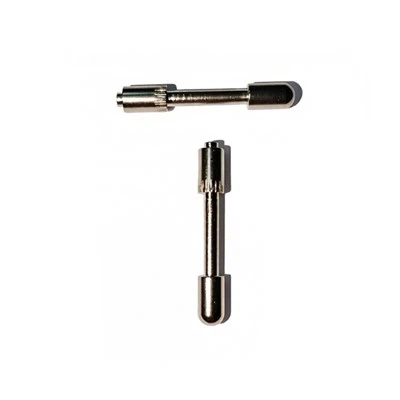
Let’s start with the basics, so we’re all on the same page. When people talk about international standards for plugs and pins, they’re almost always referring to IEC 60884, the global set of rules published by the International Electrotechnical Commission (IEC) that outlines requirements for plugs, socket-outlets, and their components. The IEC’s goal is simple: make sure plugs are safe, compatible, and consistent enough that a device from one country can plug into another’s socket without a hazard. Now, the U.S. is not the only country that doesn’t fully adopt IEC 60884—parts of Australia, Brazil, and some Middle Eastern nations have their own national standards that deviate from the global baseline. But the U.S.’s system is uniquely insular, shaped almost entirely by 19th and early 20th century decisions that have never been fully updated to align with international norms.
The core of the disconnect boils down to two key specs: pin dimensions and the type of grounding required. First, let’s talk about pin size. The U.S. standard NEMA (National Electrical Manufacturers Association) 5-15 pin—used for 15-amp, 120-volt appliances like laptops, coffee makers, and power tools—measures 1.52 mm thick, 15.87 mm long, and 8.74 mm apart between the two hot and neutral pins. Compare that to the most common international pin, used in EU, UK, and many other countries, which is the VDE 15 A pin: it’s 1.5 mm thick, 19 mm long, and spaced 19 mm apart. That’s a big difference in spacing. Now, some might point out that there is an IEC 60884 standard for a 15-amp plug, but the U.S. never adopted it. Instead, it stuck with NEMA, a trade group rather than a government body, which writes standards that are enforced by the Occupational Safety and Health Administration (OSHA) and the National Electrical Code (NEC), not the IEC.
Then there’s the grounding issue, which is where things get even more complicated for anyone who’s tried to import or export a grounded device. The U.S. NEMA 5-15 plug has a round, U-shaped ground pin that sits below the two flat hot/neutral pins. International standards like IEC 60884 and EU’s EN 60884 require a round or cylindrical ground pin, but with stricter tolerances for corrosion resistance, hardness, and current capacity. Wait, some might say—aren’t many U.S. grounded pins made of brass, same as international ones? Not exactly. A lot of low-cost U.S. plug pins, especially for budget consumer goods, use zinc alloy with a thin brass plating to cut costs. That’s a problem because international standards mandate a minimum brass thickness of 0.25 mm for pins carrying current, while U.S. standards only require 0.12 mm for low-amp applications. For a supplier like mine, that’s a non-negotiable line: our pins for export are 0.3 mm thick brass, tested to meet IEC’s corrosion tests that expose pins to salt spray for 48 hours without rust or conductivity loss. Domestic U.S. pins? We stick to the NEC’s minimum, which is enough for U.S. infrastructure, but not enough to meet global trade rules.
But here’s where the conversation gets nuanced, because it’s not all “U.S. pins don’t meet international standards”—it’s about compliance for specific use cases. For example, if you’re selling a U.S.-made appliance only in North America, your NEMA pins are 100% compliant with U.S. OSHA and NEC rules, which are separate from international ones. But if you’re shipping that same appliance to the EU, India, or Australia, you can’t just swap the plug—you have to change the entire pin design to meet that country’s national adoption of IEC standards. That’s where I see a lot of small importers and distributors get tripped up: they assume a U.S.-made pin will work internationally, or vice versa, and end up with a container of products that can’t be sold. Last year, I worked with a startup that imported 2,000 coffee makers from a U.S. factory, only to find out their NEMA 5-15 pins were spaced 8.74 mm apart, and the EU requires 19 mm spacing. By the time they caught it, half the units were packed and the retailer was about to reject the shipment. We had to re-pin every single coffee maker at our facility in Georgia, which cost them $12,000 in delays and rework—all because of that one spacing difference that no one thought to check.
Another common myth is that the U.S. is just being stubborn about adopting international standards. The reality is that U.S. electrical infrastructure is built around 120-volt, 60-hertz power, while most of the world uses 230-volt, 50-hertz power. That’s a huge difference in how plugs and pins are engineered: a pin built for 15 amps at 120 volts is smaller, thinner, and positioned closer together than a pin built for 16 amps at 230 volts. Switching to a fully international standard would require retrofitting every socket in every home, factory, and office in the U.S.—a cost that the Department of Energy estimates would be over $1 trillion, on top of the fact that most U.S. appliances are designed to work with 120-volt power. That’s not to say there haven’t been small changes: the NEC added a NEMA 5-20 pin in 2017 that’s compatible with some international 20-amp designs, but it’s still not aligned globally.
As a supplier, this disconnect is something I live with every day. We don’t manufacture a one-size-fits-all pin—we engineer to the exact specs our clients need, whether that’s U.S. domestic NEMA pins, IEC-compliant pins for export, or even custom pins for specialized applications like medical devices or solar equipment. I often tell my clients: the question isn’t “Do U.S. standard plug pins comply with international standards?” It’s “Which international standard?” If you’re referring to IEC 60884, the answer is no—with very limited exceptions that are mostly for 10-amp, low-voltage devices, which are built to meet both NEMA and IEC 60884’s basic safety specs. If you’re talking about a specific country’s adaptation of IEC, like Canada’s CSA C22.2 standard (which is almost identical to IEC 60884), then yes, many U.S. NEMA pins work in Canada, since Canada allows cross-compatibility with U.S. designs. But for the EU, China, Australia, and most of Asia and Africa, you can’t use standard U.S. pins without modification.
I’ve also seen a lot of confusion around third-party certifications, which are the real gatekeepers for compliance. International standards don’t exist on paper alone—they require testing and certification from accredited bodies like UL (Underwriters Laboratories, which is U.S.-based but global) or VDE (the German certification body). A pin might meet IEC’s physical dimensions, but if it doesn’t pass their drop test (where a plug is dropped from 1 meter to make sure pins don’t bend), or their heat test (where a plug carries current for 24 hours to make sure pins don’t overheat), it’s not compliant. For our export clients, we work with both UL and VDE to certify every batch, so their pins meet the exact requirements of their target market. Last quarter, we supplied pins to a company in Singapore that was building new industrial chargers—they needed pins that met IEC 60884 and Singapore’s local Energy Market Authority rules, so we ran three rounds of testing to get the spacing, plating, and hardness just right. That’s the level of detail most people don’t think about when they plug in a device, but it’s what keeps the lights on and prevents fires.
So what does all this mean for someone buying plug pins, whether for domestic U.S. use or export? First, don’t assume compatibility. I’ve had clients come to me saying, “I bought U.S. pins online that said they’re ‘international compliant’—are they good?” Nine times out of 10, those are cheap pins made to meet a generic, unregulated standard that doesn’t pass IEC or EU certification, which is a liability. Second, work with a supplier that understands both U.S. and global standards. When you partner with someone who’s not just selling a part, but knows the difference between NEMA 5-15, IEC 60884 Type A, and CSA C22.2, you avoid costly mistakes. Third, check the regulations for your exact target market. A pin that works in Mexico (which uses NEMA and CSA standards) won’t work in Germany, and a pin that works in Australia won’t work in Japan.

At the end of the day, the question of whether U.S. standard plug pins comply with international standards isn’t a yes/no answer—it’s a matter of context. For domestic U.S. use, they’re fully compliant with national safety rules. For export, they’re only compliant if they meet the specific national standard of the country you’re shipping to, which usually means modifying the pin design. As someone who’s built my business around supplying reliable, tested plug pins, I’ve seen firsthand how small differences in dimensions and specs can make a huge difference for a client’s bottom line and safety. If you’re sourcing plug pins for any application, especially for international trade, don’t leave it to chance. Reach out to discuss your exact needs, and let’s make sure your pins are built to meet whatever standard you’re working with.
Cn Standard Plug Pin References:
- IEC 60884-1:2020, Plugs and Socket-Outlets for Household and Similar Purposes – Part 1: General Requirements
- National Electrical Code (NEC) 2023, Article 406: Grounding-Type Plug and Receptacle Configurations
- Occupational Safety and Health Administration (OSHA), 29 CFR 1910.304: Wiring Design and Protection
- Department of Energy (DOE) Report: “Impacts of Standardizing U.S. Electrical Voltages and Frequencies”, 2021
Dongguan Fangrun Metal Products Co., Ltd.
We’re well-known as one of the leading us standard plug pin manufacturers in China, specialized in providing high quality customized products. Please feel free to buy discount us standard plug pin made in China here from our factory. For quotation and free sample, contact us now.
Address: New Town Industrial Zone,Xiegang Village,Xie Gang Town,Dongguan City
E-mail: 825556703@qq.com
WebSite: https://www.fangrunpin.com/
