If you’ve ever stood in front of a pile of untested plug valves on a warehouse floor, or fielded a frantic call from a process plant that’s watching their production line shut down because their valve doesn’t flow enough—or too much—you know how critical it is to get every part of a valve right. Here at our plug valve supply business, we talk to plant engineers and maintenance managers every single day who are either overpaying for a valve that’s way too big for their line or scrambling to source a replacement that’s too small to handle their flow rates. More often than not, that mess starts with one key number: the flow coefficient, or Cv, and not knowing how to select a plug valve that matches that Cv perfectly. Plug Valve

Let’s start with what Cv actually is, because there’s a lot of half-remembered definitions floating around. Simply put, Cv is the number of U.S. gallons of 60°F water that flow through a valve per minute when there’s a pressure drop of 1 psi across the valve. It’s a standardized measurement that’s used across every type of flow control product, so it’s the only universal way to compare how much fluid a valve can move. For plug valves, that number isn’t just a side note—it’s the core of whether your valve will work for your application, because plug valves work by rotating a cylindrical or tapered plug with a port in it to open or close the flow path, so their Cv curve is very different from a gate or ball valve, for example. Gate valves tend to have high Cv when fully open, but drop off sharply as they start to close, while ball valves have a more linear Cv change with rotation, and plug valves fall somewhere in the middle, with a smooth, predictable Cv curve across most of their opening range. That difference is why sizing a plug valve by just nominal pipe size (NPS) is a huge mistake— I’ve seen a 3-inch plug valve that’s rated for a Cv of 120, and another 3-inch plug valve from a different manufacturer that’s rated for a Cv of 210, because of how the port is cut and the plug is shaped. Nominal size tells you the pipe thread or flange size, not how much fluid the valve can actually move.
The first step to calculating the right Cv for your plug valve is to figure out your system’s required flow rate and pressure drop. You can’t skip this part and just use an existing valve’s Cv as a reference, because every system is different. Let’s break that down step by step. First, get your actual flow rate: that’s the volume of fluid (in gallons per minute, or GPM) that your process needs to move at a given point. Then, figure out the total allowable pressure drop (ΔP) across the plug valve. Pressure drop is the amount of pressure lost as the fluid moves through the valve, and it’s measured in psi. Every system has a maximum allowable ΔP—if you go over that, you’ll get issues like cavitation, which is when low pressure zones in the valve cause bubbles to form and collapse, eroding the valve and piping over time, or excessive noise that’s a safety hazard in a plant. For most liquid applications, the formula to calculate required Cv is straightforward: Cv = (GPM × √Specific Gravity) / √ΔP. Specific gravity (SG) is the density of your fluid compared to water, so for water, SG is 1.0, for gasoline it’s around 0.72, and for heavier oils it’s 0.9 or higher. For gases or steam, the formula is a little different because they’re compressible—you have to account for the absolute pressure and temperature of the gas, but the core idea is the same: Cv is based on how much fluid you need to move at a given pressure drop.
Here’s where a lot of people go wrong: they pick a plug valve with a Cv that matches the required calculation exactly, but forget about the valve’s actual operating range. Plug valves aren’t designed to operate at 100% open all the time—most process applications require modulating the valve to adjust flow, so you need to leave room on the Cv curve for that modulation. For example, if your required Cv is 80, you don’t want to pick a plug valve that has a minimum Cv of 75 and a maximum of 85 at full open. That leaves zero room for adjustment, so any slight change in your system’s flow will make the valve either too closed or too open, leading to control issues or unnecessary wear. A good rule of thumb for most liquid applications is to pick a plug valve whose maximum Cv is 20-30% higher than your calculated required Cv. That gives you a buffer for normal system fluctuations, like changes in process temperature, fluid density, or even pipe friction as your piping ages. For gas or steam applications, that buffer can be a little wider—around 25-35%—because gases are more sensitive to pressure changes and velocity.
Another key factor that people overlook is the type of plug valve you’re using, because different styles of plug valves have very different Cv values. There are three main types of plug valves that we supply, each with their own Cv characteristics. First are lubricated plug valves, which use a grease between the plug and the valve body to create a tight seal. Lubricated plug valves typically have higher Cv values than non-lubricated styles, because the grease eliminates friction between the plug and body, so the port can be sized larger without leakage. Second are non-lubricated (or tight shutoff) plug valves, which use an elastomer or metal seal to shut off flow without lubrication. These tend to have slightly lower Cv values than lubricated ones, because the seal takes up a small amount of space in the port. Third are eccentric plug valves, which have an off-center plug that closes against the seat, reducing wear. Eccentric plug valves also have lower Cv values than full-port lubricated valves, because their port design is optimized for shutoff rather than maximum flow. If you’re working with a high-flow liquid application, like a water transfer line, a full-port lubricated plug valve will give you the highest Cv for the size, so you can use a smaller valve than you would with a tight-shutoff style, saving on cost and installation space. If you’re working with a hazardous fluid that can’t be contaminated by lubricant, like food-grade process lines or pharmaceutical applications, you’ll need a non-lubricated plug valve, and you’ll have to adjust your Cv calculation to match its lower rated Cv, not a lubricated valve’s rating.
Cavitation is another critical consideration when selecting Cv for your plug valve, especially for liquid applications. Cavitation happens when the pressure at the outlet of the plug valve drops below the vapor pressure of the fluid, causing vapor bubbles to form. Those bubbles collapse when they move to a higher pressure zone after the valve, and the force of that collapse can erode the plug, valve body, and even downstream piping. When cavitation occurs, the actual flow rate is much lower than your calculated Cv, and the valve will fail prematurely. The good news is that you can adjust your Cv selection to avoid cavitation. If your calculated Cv leads to a pressure drop that would cause cavitation, you have two options: either select a plug valve with a higher Cv, so the pressure drop across the valve is lower, or choose a cavitation-resistant plug valve design. Some plug valves have a notched plug or a multi-port body that reduces the pressure drop, so you can use a higher Cv valve without causing cavitation. For example, if you have a water line operating at 100 psi inlet pressure, and your calculated Cv would create a pressure drop of 60 psi (which is enough to cause cavitation, since water’s vapor pressure at 60°F is about 0.25 psi), picking a plug valve with a 30% higher Cv will reduce the pressure drop to around 45 psi, eliminating cavitation, while still giving you the flow rate you need.
Let’s walk through a real example, because that’s how this all makes sense. Last month, we worked with a municipal water treatment plant that needed to replace a plug valve on their raw water intake line. Their calculated flow rate was 1500 GPM, their pressure drop across the valve could be no more than 20 psi, and the specific gravity of raw water is 1.0. Using the liquid Cv formula, that would be Cv = (1500 × √1.0) / √20 = 1500 / 4.47 ≈ 335. So their required Cv is approximately 335. Now, if they’d just gone to a supplier and asked for a 6-inch plug valve, they might have gotten a standard lubricated plug valve with a rated Cv of 310. That’s too small—their calculated Cv is 335, so the standard valve would only give them around 1400 GPM, which is not enough for their intake line, leading to a shutdown when demand goes up. Instead, we recommended a 6-inch full-port lubricated plug valve rated for a maximum Cv of 420. That’s 25% higher than their required Cv, which fits our buffer rule. It gives them enough flow at 20 psi drop, and if their demand increases a little in the future, they have room to adjust the valve opening without having to replace it. We also checked their pressure: their inlet pressure is 80 psi, so the pressure drop across the new valve is 18 psi, which is well above water’s vapor pressure, so no cavitation issues. That’s exactly how it’s supposed to work.
Another example for gas applications: a chemical plant needed a plug valve on a natural gas line, with a flow rate of 500 standard cubic feet per minute (SCFM), inlet pressure of 100 psig, outlet pressure of 80 psig, and gas specific gravity of 0.6. For compressible fluids, the Cv formula is a bit different, but the core is the same: calculated Cv was approximately 220. We recommended a 4-inch eccentric plug valve with a maximum Cv of 280, which is a 27% buffer. They chose an eccentric style because the line has occasional debris, and the eccentric plug’s design resists plugging and wear from foreign matter. The higher Cv gave them enough flow, and the buffer allowed for slight fluctuations in gas pressure from their upstream compressor.
Now, let’s talk about what to avoid when selecting Cv for a plug valve. The biggest mistake we see is sizing by nominal pipe size alone. We had a customer a few months ago who ordered a 4-inch plug valve to replace a 4-inch gate valve on a fuel oil line. The gate valve had a Cv of 220 at full open, so the customer assumed the 4-inch plug valve would be the same. Instead, the standard 4-inch plug valve they ordered had a Cv of 160, which was way too low. The line only got half the flow it needed, leading to slow process cycles and excess energy use to push fuel through the undersized valve. They had to order a new valve within a week, costing them extra money and downtime. That’s the kind of avoidable mistake that comes from not checking the actual Cv rating, not just the pipe size.
Another mistake is ignoring service conditions. If your fluid is hot (above 200°F) or has high viscosity, the Cv formula changes a little. For viscous fluids, you have to adjust the SG and pressure drop to account for the fluid’s thickness, because thick oil will have a lower Cv than water even at the same flow rate and pressure drop. We had a food processing plant with a cooking oil line that had a flow rate of 800 GPM, viscosity of 100 centistokes, which is much thicker than water. Using the standard Cv formula for water gave them a calculated Cv of 800, but the actual required Cv for the oil was closer to 1050, because the thick oil has more friction. If we’d given them a valve sized for 800 Cv, it would have been too small, and they’d have had trouble moving the oil through the line. Adjusting for viscosity is crucial for any non-water fluid.
Finally, once you’ve calculated your required Cv and selected a plug valve with the right Cv rating, you should verify it with the valve manufacturer’s actual performance data, not just catalog values. A lot of suppliers list maximum Cv for full open, but don’t publish the Cv at partial openings, which is important if you’re going to modulate the valve. For example, some plug valves have a Cv curve that drops off sharply below 70% open, so if you need to operate the valve between 30% and 70% open, you need to make sure the valve has a smooth, linear Cv in that range. Our company publishes full Cv curves for every plug valve we supply, so customers can see exactly how much flow they’ll get at every degree of rotation, not just full open. That level of detail is the difference between a valve that works for your application and one that becomes a problem.
At the end of the day, selecting the right plug valve flow coefficient isn’t about memorizing formulas or guessing about pipe sizes—it’s about understanding your specific application’s flow rate, pressure drop, fluid properties, and operating conditions, then matching those to a plug valve’s actual Cv performance. If you’re not sure how to work through these calculations, or if you’ve had trouble with a plug valve that’s too small or too big, our team is here to help. We’ve worked with everything from municipal water lines to chemical processing plants, and we can walk you through every step of calculating the right Cv, selecting the right plug valve style, and making sure you get a valve that will perform reliably for your application. We don’t sell one-size-fits-all valves, because we know every system is different.
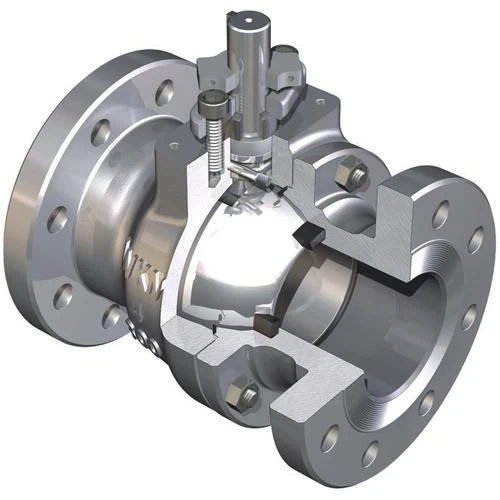
If you’re planning a new project or replacing existing valves, don’t leave your flow to chance. Reach out to our team to discuss your requirements, and we’ll help you select the right plug valve with the exact flow coefficient you need.
Gate Valve References:
- Miller, J. E. (1990). Flow Control Valves: Sizing and Selection. Instrument Society of America.
- Rahmeyer, W. Z. (2006). Fluid Flow Valving: Selection and Application. Taylor & Francis.
- American National Standards Institute (ANSI). (2019). ANSI/ISA-75.01.01: Control Valve Sizing Equations for Liquid, Gas, and Steam. International Society of Automation.
- Skousen, P. L. (2015). Valve Handbook (3rd ed.). McGraw-Hill Education.
Zhejiang Sunawei Valve Co., Ltd.
As one of the most professional plug valve manufacturers and suppliers in China, we offer a wide range of valves with superior quality. Please feel free to wholesale high quality plug valve at competitive price from our factory. We also accept customized orders.
Address: Anfeng Industrial, Oubei Town, Wenzhou City, Zhejiang, China
E-mail: snv@sunawevalve.com
WebSite: https://www.sunay-valves.com/
